

2016 AAAOH Artists - please upload your images using the "Submit Research" link on the left hand side of this screen.
The full archive of the Asian American Art Oral History Project is held is DePaul University’s Special Collections and Archives Department 2350 North Kenmore Avenue 2nd floor, Chicago, IL 60614 . For more information contact us at 773-325-7864, or [email protected]




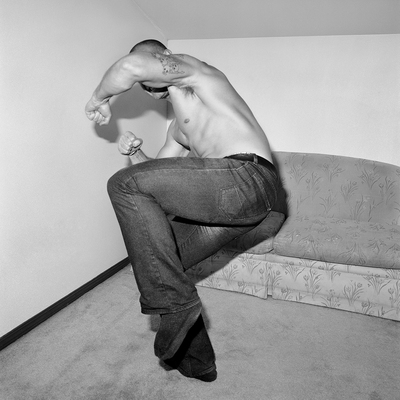

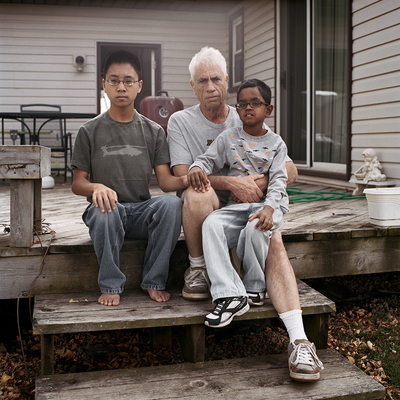
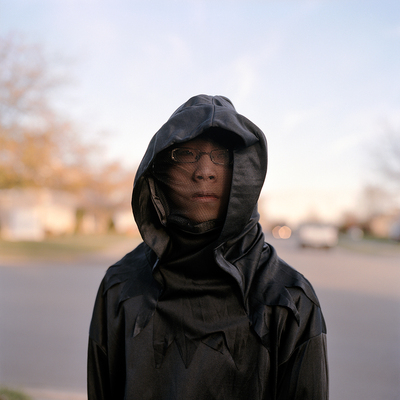
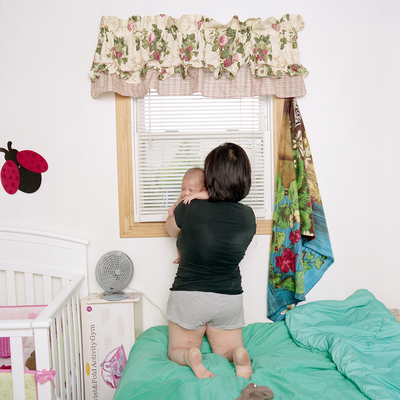









-
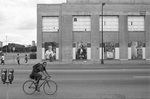
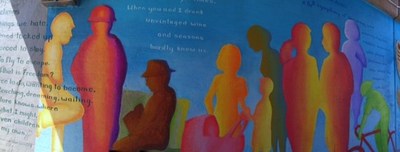
Lake STreet USA - Lake St. & 10th Ave.
Wing Young Huie
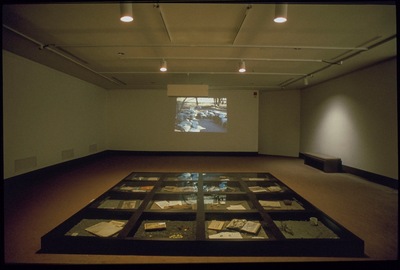
Lake Street USA Installation View, Minneapolis, MN (1997-2000)
Lake Street USA "The inner-city neighborhoods of Minneapolis are all connected by one major vein, Lake Street. In 2000, photographer Huie used this stretch of pocked pavement and diverse communities as both a subject and a frame for a massive documentary project. For four years he photographed the people and cityscape of the street, not shying away from the poverty, the play, and the variety of human characters he found along the way. He then placed the photographs along a six-mile section of Lake Street in one of the largest public art projects the city has seen. This book reproduces 500 of the 675 black-and-white photographs Huie used in his show along with an interview with Huie by Louis Mazza of the Walker Art Center and short texts quoting some of the subjects. These are brave photographs of people moving through what look like difficult lives lived as well as can be, and Huie remains faithful to the diversity of the city and the reality of his subjects' lives." - Library Journal (Copyright 2002 Cahners Business Information, Inc.)
See: http://photos.wingyounghuie.com/p269695281/h397b6121#h42e90c0e
-
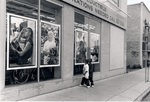
Lake STreet USA - Lake St. & 5th Ave.
Wing Young Huie
Lake Street USA Installation View, Minneapolis, MN (1997-2000)
Lake Street USA "The inner-city neighborhoods of Minneapolis are all connected by one major vein, Lake Street. In 2000, photographer Huie used this stretch of pocked pavement and diverse communities as both a subject and a frame for a massive documentary project. For four years he photographed the people and cityscape of the street, not shying away from the poverty, the play, and the variety of human characters he found along the way. He then placed the photographs along a six-mile section of Lake Street in one of the largest public art projects the city has seen. This book reproduces 500 of the 675 black-and-white photographs Huie used in his show along with an interview with Huie by Louis Mazza of the Walker Art Center and short texts quoting some of the subjects. These are brave photographs of people moving through what look like difficult lives lived as well as can be, and Huie remains faithful to the diversity of the city and the reality of his subjects' lives." - Library Journal (Copyright 2002 Cahners Business Information, Inc.)
See: http://photos.wingyounghuie.com/p269695281/h397b6121#h42e90c0e
-
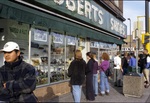
Lake STreet USA - Lake St. & Chicago Ave.
Wing Young Huie
Lake Street USA Installation View, Minneapolis, MN (1997-2000)
Lake Street USA "The inner-city neighborhoods of Minneapolis are all connected by one major vein, Lake Street. In 2000, photographer Huie used this stretch of pocked pavement and diverse communities as both a subject and a frame for a massive documentary project. For four years he photographed the people and cityscape of the street, not shying away from the poverty, the play, and the variety of human characters he found along the way. He then placed the photographs along a six-mile section of Lake Street in one of the largest public art projects the city has seen. This book reproduces 500 of the 675 black-and-white photographs Huie used in his show along with an interview with Huie by Louis Mazza of the Walker Art Center and short texts quoting some of the subjects. These are brave photographs of people moving through what look like difficult lives lived as well as can be, and Huie remains faithful to the diversity of the city and the reality of his subjects' lives." - Library Journal (Copyright 2002 Cahners Business Information, Inc.)
See: http://photos.wingyounghuie.com/p269695281/h397b6121#h42e90c0e
-
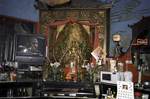
Looking for Asian America - Bar, Chinatown, San Francisco
Wing Young Huie
Looking For Asian America: An Ethnocentric Tour (2001-2002)
Looking For Asian America: An Ethnocentric Tour From one of the United States' most diverse areas (Hilo, Hawaii) to its least (Slope, North Dakota), Huie and his wife Tara spent nine months traveling through 39 states on an "ethnocentric" tour of their homeland. Some of the sights include a Vietnamese Elvis, a Hmong enclave in rural North Carolina, a meditating Falun Gong protestor in front of the Washington Monument, a bubble tea valley girl, ABCs (American-born Chinese), FOAs (fresh-off-the-airplane), and a self-described red-neck Chinese restaurant owner near the Okefenokee Swamp. The result is an idiosyncratic and personal odyssey through an America where Asians, particularly Chinese, happen to be in the majority.
"I am the youngest of six and the only child not born in China. For most of my life I've looked at my own Chinese-ness through a white, middle-class prism. Outside of my family, people who looked like me were hard to find in Duluth, Minnesota, or in the popular culture I embraced. My mom made me pray to Buddha every New Year, but it was Jesus Christ Superstar who became my cultural touchstone. At times my own parents seemed exotic and yes, foreign, to me.
They also became my first photographic subjects. Twenty-five years later I embarked on a nine-month, cross-country odyssey, with a distinct awareness of being a hyphenated American. It was refreshing to look at my home country through my particular bi-focal ethnocentric lens and see the exotic as familiar, and vice-versa. What I found was a place that exists mostly under the prevailing cultural radar, but is as American as Buddha bars, Bruce Lee dolls, and chop suey." -Wing Huie
See: http://photos.wingyounghuie.com/p269695281/h397b6121#h2a71520a
-
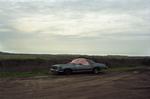
Looking for Asian America - California Coast
Wing Young Huie
Looking For Asian America: An Ethnocentric Tour (2001-2002)
Looking For Asian America: An Ethnocentric Tour From one of the United States' most diverse areas (Hilo, Hawaii) to its least (Slope, North Dakota), Huie and his wife Tara spent nine months traveling through 39 states on an "ethnocentric" tour of their homeland. Some of the sights include a Vietnamese Elvis, a Hmong enclave in rural North Carolina, a meditating Falun Gong protestor in front of the Washington Monument, a bubble tea valley girl, ABCs (American-born Chinese), FOAs (fresh-off-the-airplane), and a self-described red-neck Chinese restaurant owner near the Okefenokee Swamp. The result is an idiosyncratic and personal odyssey through an America where Asians, particularly Chinese, happen to be in the majority.
"I am the youngest of six and the only child not born in China. For most of my life I've looked at my own Chinese-ness through a white, middle-class prism. Outside of my family, people who looked like me were hard to find in Duluth, Minnesota, or in the popular culture I embraced. My mom made me pray to Buddha every New Year, but it was Jesus Christ Superstar who became my cultural touchstone. At times my own parents seemed exotic and yes, foreign, to me.
They also became my first photographic subjects. Twenty-five years later I embarked on a nine-month, cross-country odyssey, with a distinct awareness of being a hyphenated American. It was refreshing to look at my home country through my particular bi-focal ethnocentric lens and see the exotic as familiar, and vice-versa. What I found was a place that exists mostly under the prevailing cultural radar, but is as American as Buddha bars, Bruce Lee dolls, and chop suey." -Wing Huie
See: http://photos.wingyounghuie.com/p269695281/h397b6121#h2a71520a
-
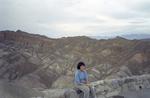
Looking for Asian America - Death Valley, California
Wing Young Huie
Looking For Asian America: An Ethnocentric Tour (2001-2002)
Looking For Asian America: An Ethnocentric Tour From one of the United States' most diverse areas (Hilo, Hawaii) to its least (Slope, North Dakota), Huie and his wife Tara spent nine months traveling through 39 states on an "ethnocentric" tour of their homeland. Some of the sights include a Vietnamese Elvis, a Hmong enclave in rural North Carolina, a meditating Falun Gong protestor in front of the Washington Monument, a bubble tea valley girl, ABCs (American-born Chinese), FOAs (fresh-off-the-airplane), and a self-described red-neck Chinese restaurant owner near the Okefenokee Swamp. The result is an idiosyncratic and personal odyssey through an America where Asians, particularly Chinese, happen to be in the majority.
"I am the youngest of six and the only child not born in China. For most of my life I've looked at my own Chinese-ness through a white, middle-class prism. Outside of my family, people who looked like me were hard to find in Duluth, Minnesota, or in the popular culture I embraced. My mom made me pray to Buddha every New Year, but it was Jesus Christ Superstar who became my cultural touchstone. At times my own parents seemed exotic and yes, foreign, to me.
They also became my first photographic subjects. Twenty-five years later I embarked on a nine-month, cross-country odyssey, with a distinct awareness of being a hyphenated American. It was refreshing to look at my home country through my particular bi-focal ethnocentric lens and see the exotic as familiar, and vice-versa. What I found was a place that exists mostly under the prevailing cultural radar, but is as American as Buddha bars, Bruce Lee dolls, and chop suey." -Wing Huie
See: http://photos.wingyounghuie.com/p269695281/h397b6121#h2a71520a
-
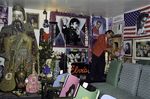
Looking for Asian America - Henry, Houston, Texas
Wing Young Huie
Looking For Asian America: An Ethnocentric Tour (2001-2002)
Looking For Asian America: An Ethnocentric Tour From one of the United States' most diverse areas (Hilo, Hawaii) to its least (Slope, North Dakota), Huie and his wife Tara spent nine months traveling through 39 states on an "ethnocentric" tour of their homeland. Some of the sights include a Vietnamese Elvis, a Hmong enclave in rural North Carolina, a meditating Falun Gong protestor in front of the Washington Monument, a bubble tea valley girl, ABCs (American-born Chinese), FOAs (fresh-off-the-airplane), and a self-described red-neck Chinese restaurant owner near the Okefenokee Swamp. The result is an idiosyncratic and personal odyssey through an America where Asians, particularly Chinese, happen to be in the majority.
"I am the youngest of six and the only child not born in China. For most of my life I've looked at my own Chinese-ness through a white, middle-class prism. Outside of my family, people who looked like me were hard to find in Duluth, Minnesota, or in the popular culture I embraced. My mom made me pray to Buddha every New Year, but it was Jesus Christ Superstar who became my cultural touchstone. At times my own parents seemed exotic and yes, foreign, to me.
They also became my first photographic subjects. Twenty-five years later I embarked on a nine-month, cross-country odyssey, with a distinct awareness of being a hyphenated American. It was refreshing to look at my home country through my particular bi-focal ethnocentric lens and see the exotic as familiar, and vice-versa. What I found was a place that exists mostly under the prevailing cultural radar, but is as American as Buddha bars, Bruce Lee dolls, and chop suey." -Wing Huie
See: http://photos.wingyounghuie.com/p269695281/h397b6121#h2a71520a
-
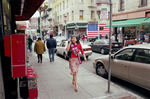
Miss Congeniality, Chinatown, San Francisco, CA
Wing Young Huie
Title: Miss Congeniality, Chinatown, San Francisco, CA
Project: Looking For Asian America: An Ethnocentric Tour (2001 – 2002)