




-
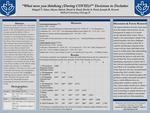
"What were you thinking (During COVID)?" Decisions to Declutter
Abigail T. Adan, Alyssa Altieri, Hetal A. Patel, and Devki A. Patel
The present study examines the relationship between psychological reactance and clutter quality of life. Psychological reactance was a concept created by Brehm (1966) to describe the emotional response or state in a situation or environment when there is a restriction or loss of freedom. According to this theory when coercive, persuasive, or other attempts that threaten freedom of choice causes reactance to increase. This theory is most often associated with consumer behavior but within this study a relationship between how people react to advice and how that affects their decision to declutter or not is plausible. What was not examined was if an individual decided to declutter or not but the outcome of that is the Clutter Quality of Life with the initial variable and outcome of correlations. Clutter Quality of Life from its scale is used to describe and measure the consequences of clutter in a person's life. It highlights wellbeing and the negative effects of clutter in life. Therefore, the present study examines the relationship between psychological reactance and clutter quality of life.
-
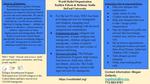
World Relief Organization
Kaitlyn Falson and Brittany Kulla
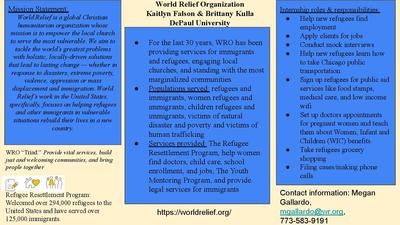
World Relief is a global Christian humanitarian organization whose mission is to empower the local church to serve the most vulnerable. We aim to tackle the world’s greatest problems with holistic, locally-driven solutions that lead to lasting change — whether in response to disasters, extreme poverty, violence, oppression or mass displacement and immigration. World Relief’s work in the United States, specifically, focuses on helping refugees and other immigrants in vulnerable situations rebuild their lives in a new country.
-
The Effect of Stress on Hostility Moderated by Acculturation Among Asian Americans
Lily Xiao
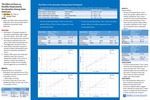
The present study is an experimental design that aims at examining the relationships among stress, aggression, and acculturation. The sample included 119 people including 59 Caucasians and 60 Asians. Their ages ranged from 18 to 38 (M = 20.74, SD = 2.65). Participants’ self-reported stress at Time 3 (immediately after being exposed to the stressful situation) mediated the effect of stress at Time 1 (baseline stress) on hostility at Time 3 (B = .10, CI[.05, .17]). This effect was larger for Asians (B = .14, CI[.05, .27]) compared to Caucasians (B = .06, CI[.0038, .14]). For Asians, heart rate at Time 3 also mediated the effect of heart rate at Time 1 on hostility at Time 3 (B = .0097, CI[.0016, .02]), but for Caucasians, this mediation was not significant (B = -.0012, CI[-.01, .0023]). Asian participants also responded to the Asian Values Scale-Revised, a higher score on which indicated higher adherence to Asian values and less acculturation. Results from multiple regression displayed a significant interaction effect of Time 1 Stress and Asian values on Time 3 Stress (B = 1.07, p = .01), but the interaction term of Time 3 Stress and Asian values on hostility did not appear significant (B = .16, p = .45). Results from simple slopes analysis suggested that for less acculturated Asians, the effect of Time 1 stress on hostility mediated by Time 3 stress was greater (B = .26, CI[.08, .51] at 1SD) compared to more acculturated Asians (B = .05, CI[-.03, .20] at -1SD). Asian values also moderated the effect of Time 3 heart rate on hostility (B = -.05, p = .02). Simple slope analysis suggested that for less acculturated Asians, the effect of Time 1 heart rate on hostility mediated by Time 3 heart rate was lesser (B = .0001, CI[-.02, .02] at 1SD) compared to more acculturated Asians (B = .02, CI[.0050, .05] at -1SD).